Prime Market Features & Capabilities
A comprehensive technical overview of every system that powers the Prime Market platform — from cryptographic transaction security and dual-currency payments to vendor trust scoring and distributed infrastructure resilience.

2-of-3 Multi-Signature Transaction Security
Every transaction processed through Prime Market is governed by a 2-of-3 multi-signature escrow mechanism. Three private keys exist for each transaction: one held by the buyer, one by the vendor, and one by the platform itself. No single party can authorize the movement of funds without the cooperation of at least one other key holder. This architecture fundamentally eliminates the risk of unilateral fund seizure, which has historically been the downfall of centralized marketplace wallets.
When a buyer places an order, funds are locked into a multisig address generated specifically for that transaction. Upon confirmed delivery, the buyer and vendor co-sign to release payment. If a dispute arises, the platform moderation team steps in as the third signatory, reviewing evidence from both parties before authorizing fund distribution. The entire process is transparent and auditable on the blockchain, providing an immutable record of every resolution.
Unlike platforms that pool user deposits into a single hot wallet — creating an attractive target for both external attackers and internal exit scams — Prime Market's per-transaction escrow model ensures that funds remain under shared cryptographic control at all times. For a full walkthrough of how escrow works in practice, consult the getting started guide. You can also learn more about the underlying protections on the security page.
- Buyer key — generated upon order placement, stored client-side
- Vendor key — issued at listing creation, tied to PGP identity
- Platform key — held in cold storage, activated only during disputes
Escrow Status Indicators
Payment Infrastructure: BTC & XMR
Prime Market operates a dual-currency payment system supporting both Bitcoin (BTC) and Monero (XMR). While Bitcoin remains the most widely recognized cryptocurrency, its transparent blockchain makes transaction tracing a realistic concern. That is why Prime Market recommends Monero as the preferred payment method — its protocol-level privacy features, including ring signatures, stealth addresses, and RingCT, ensure that transaction amounts, sender identities, and receiver identities are cryptographically obscured by default.
Each user receives a unique deposit address generated from the platform's hierarchical deterministic wallet infrastructure. Deposits are credited after the required number of network confirmations: typically one confirmation for Monero and three for Bitcoin. The platform handles all currency conversion internally at current market rates when cross-currency transactions are necessary, so vendors can price their listings in one currency while accepting payment in either.
For users prioritizing maximum anonymity, the buyer's guide recommends acquiring Monero through decentralized exchanges or atomic swaps rather than KYC-compliant centralized platforms. This end-to-end approach ensures that no identifying information is attached to funds at any point in the transaction lifecycle. The security overview covers additional operational security practices for handling cryptocurrency safely.
Time-Weighted Vendor Scoring
The vendor reputation system on Prime Market uses a time-weighted scoring algorithm that emphasizes recent performance over historical volume. A vendor's trust level is calculated from a composite of metrics: order completion rate, average delivery time, dispute frequency, and buyer satisfaction ratings — all weighted toward the most recent 90-day window. This rolling evaluation prevents situations where long-dormant accounts retain artificially high trust scores based on outdated activity.
Vendors are classified into tiered trust levels prominently displayed alongside every listing. New vendors enter a probationary tier with transaction limits and mandatory escrow periods. As they accumulate verified successful transactions and positive feedback, they graduate to higher tiers with increased privileges, including larger transaction limits and eligibility for featured placement in search results.
The reputation dashboard provides vendors with granular analytics about their performance metrics, response times, and comparative standing within their product category. Buyers can filter search results by vendor tier, minimum rating threshold, and account age — giving them full control over their risk tolerance. For detailed guidance on evaluating vendors, see the platform guide.
Multi-Factor Search Algorithm
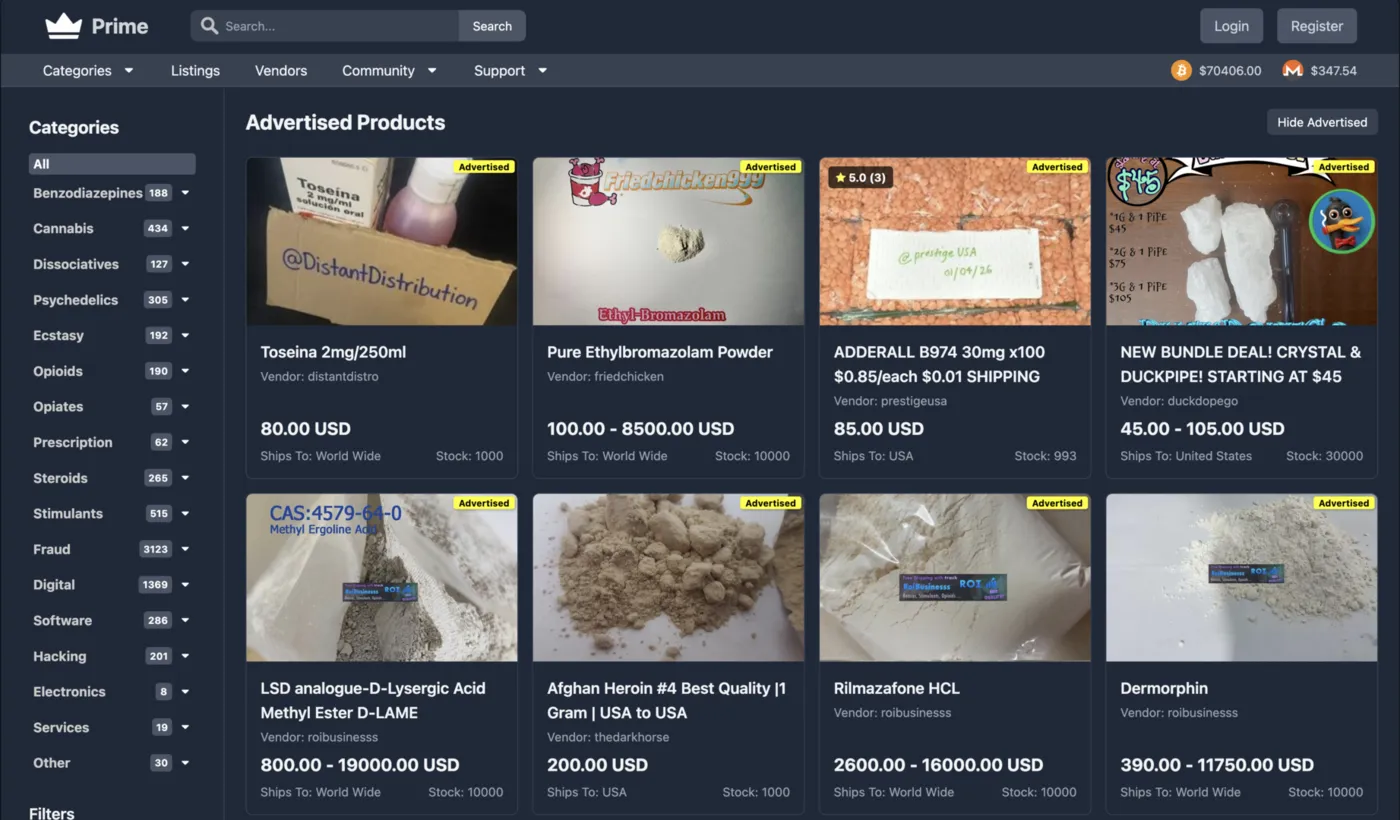
Finding the right listing on Prime Market is powered by a multi-factor ranking algorithm that goes beyond simple keyword matching. Search results are scored using a weighted combination of textual relevance, vendor trust level, order completion history, pricing competitiveness, and listing recency. This approach surfaces high-quality listings from reliable vendors rather than simply returning the newest or cheapest options.
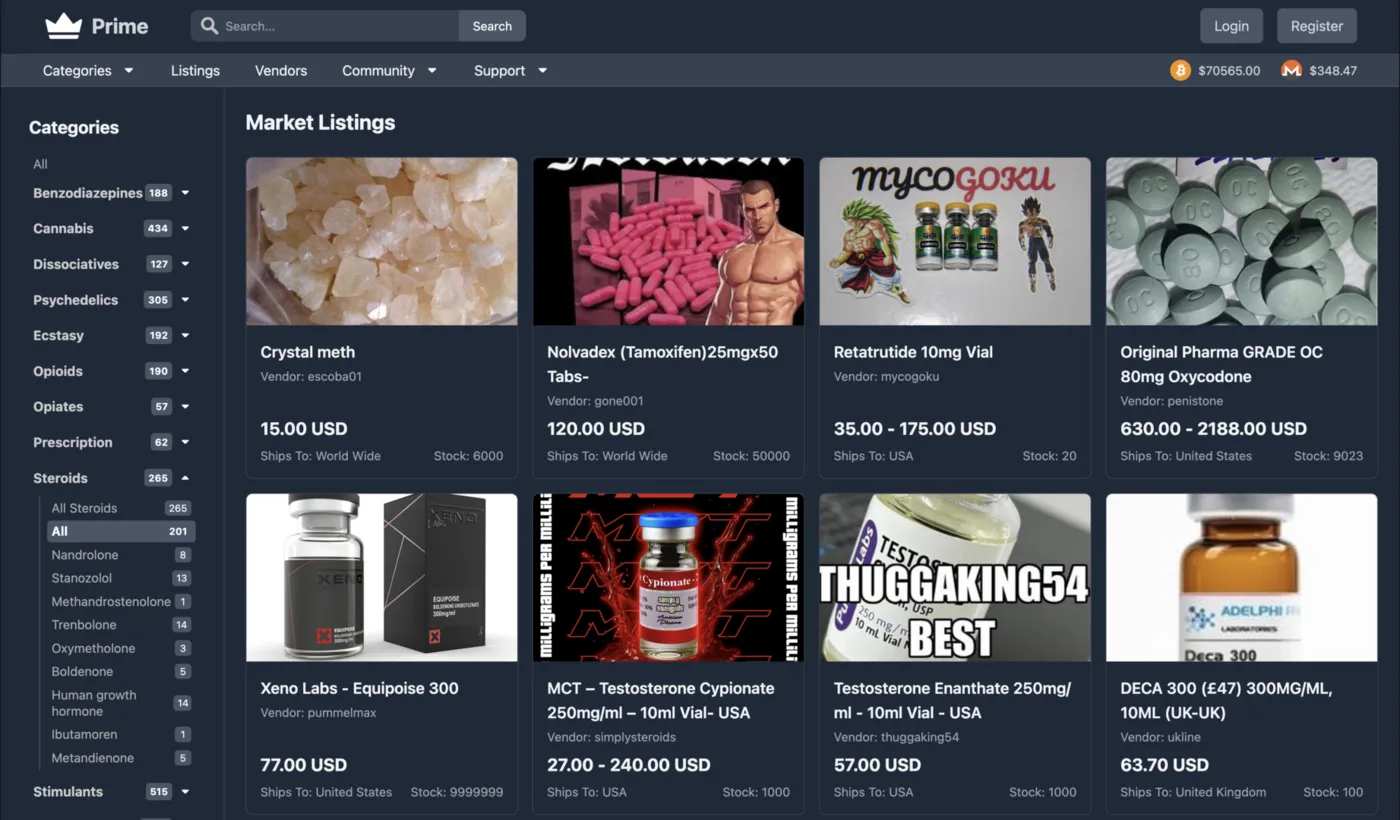
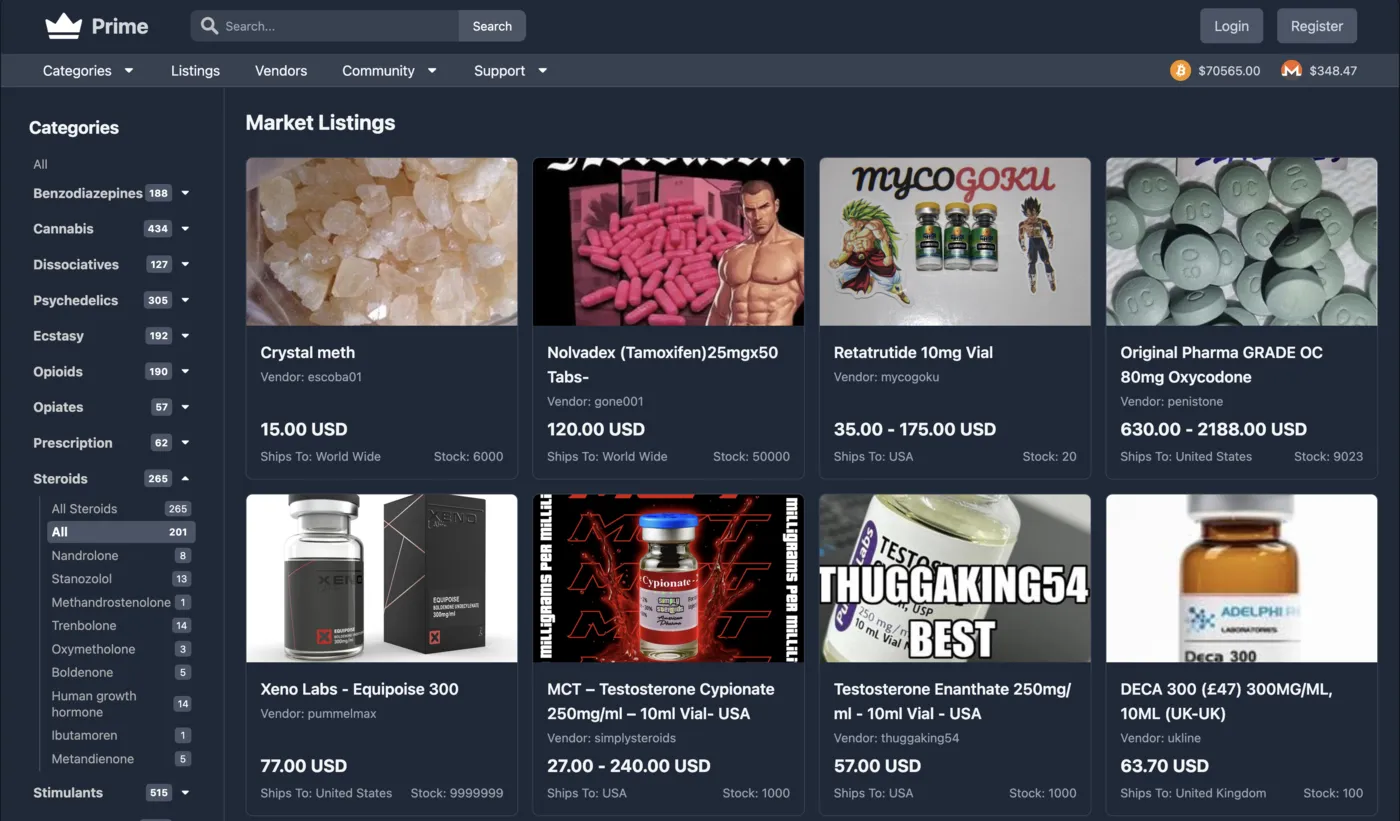
The category taxonomy is organized into a hierarchical structure with primary categories, subcategories, and attribute-based filters. Users can narrow results by price range, shipping region, payment currency, vendor tier, and listing age. Saved search configurations allow returning users to quickly access their preferred filter combinations without reconfiguring parameters on each visit.
Product pages display comprehensive listing details including high-resolution images, shipping terms, refund policies, and the vendor's category-specific performance metrics. Buyer reviews are displayed chronologically with verified purchase indicators, helping prospective buyers distinguish genuine feedback from manipulated ratings. The platform overview provides quick access to featured categories and trending listings.
Infrastructure Resilience Architecture
Prime Market operates across five independently hosted onion mirrors, each running on geographically separated infrastructure with distinct hosting providers. This distributed architecture ensures that no single point of failure can take the entire platform offline. If one mirror experiences downtime — whether from hardware failure, network disruption, or targeted attack — traffic is automatically redistributed across the remaining active instances with no user intervention required.
Each mirror maintains a synchronized copy of the platform database through encrypted replication channels, ensuring that account data, order history, and wallet balances remain consistent regardless of which mirror a user accesses. The synchronization protocol uses end-to-end encrypted tunnels between nodes, preventing any intermediary from intercepting or modifying data in transit.
The platform's automated health monitoring system continuously checks each mirror's response time, SSL certificate validity, and database synchronization status. Real-time availability data is published on the status page, where users can verify which mirrors are currently operational before connecting. For the latest verified mirror addresses, check the homepage or bookmark the status dashboard.
All mirrors sync via encrypted replication channels. View detailed uptime metrics and latency data on the status dashboard.
http://primeyr5lrerg5wigkzd7qp46kaq7f2qco7tgbmdmo2bdvmiwnbixkid.onion
How Prime Market Compares to Other Platforms
A side-by-side evaluation of key platform capabilities. Prime Market's architecture addresses the most common shortcomings found in competing marketplace platforms, delivering superior transaction security, privacy infrastructure, and vendor accountability across every measurable dimension.
| Feature | Prime Market | Marketplace A | Marketplace B |
|---|---|---|---|
| Multi-Signature Escrow | Full 2-of-3 | Centralized Only | No Escrow |
| Monero (XMR) Support | Native + Preferred | Supported | BTC Only |
| Bitcoin (BTC) Support | Full Support | Full Support | Full Support |
| Zero JavaScript Policy | Enforced | JS Required | Partial |
| Distributed Mirrors | 5 Independent Nodes | 2 Mirrors | Single Instance |
| Rolling Vendor Reputation | 90-Day Weighted | Lifetime Average | Lifetime Average |
| PGP 2FA Authentication | Required for Vendors | Optional | Not Available |
| Auto-Finalize Protection | 14-Day Window | 7-Day Window | 3-Day Window |
| Dispute Mediation SLA | Under 48 Hours | 72+ Hours | No SLA |
| Custom Codebase | Built From Scratch | Forked Source | Forked Source |
These features represent the core architecture of the Prime Market platform. For setup instructions and first-transaction walkthroughs, visit the complete guide. For real-time mirror availability and system health data, check the status dashboard. Security best practices and threat model documentation are available on the security page.